Comparing passive RFID to piezoelectric tags for vibration tracking

Comparing Passive RFID and Piezoelectric Tags for Vibration Tracking
Vibration tracking plays a critical role in industries such as manufacturing, aerospace, automotive, and infrastructure monitoring. By detecting changes in mechanical oscillations, organizations can predict equipment failures, optimize maintenance schedules, and enhance operational safety. Two prominent technologies used for this purpose are passive RFID (Radio Frequency Identification) tags and piezoelectric sensors. This comparison explores their operational principles, strengths, limitations, and suitability for vibration monitoring applications, with a focus on purchaserfid.com as a leading supplier of passive RFID solutions.
Passive RFID Technology
How It Works
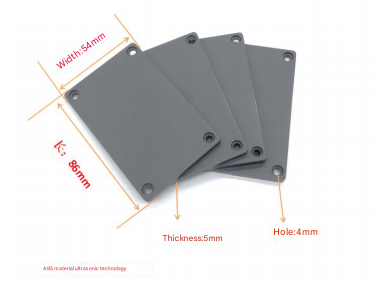
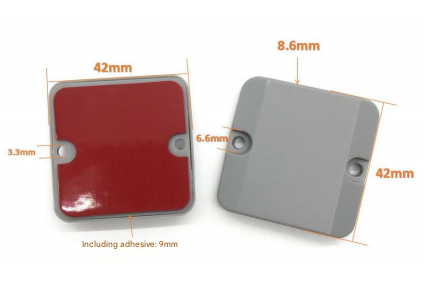
Passive RFID tags rely on electromagnetic energy transmitted by an RFID reader to power the tag and enable data transmission. These tags lack an internal power source and instead use backscatter modulation to reflect the reader’s signal while encoding vibration or environmental data. Advanced passive RFID systems integrate accelerometers or strain gauges to measure vibration frequency, amplitude, and direction.
Advantages
- Battery-Free Operation: Eliminates the need for frequent maintenance or battery replacement, making them ideal for hard-to-reach installations.
- Cost-Effectiveness: Lower upfront and operational costs compared to active sensors.
- Scalability: Supports simultaneous monitoring of hundreds of tags within a network.
- Durability: Resilient in harsh environments (e.g., extreme temperatures, moisture).
Challenges
- Limited read range (typically under 10 meters without specialized equipment).
- Requires proximity to a reader for data collection, limiting real-time monitoring capabilities.
Applications
- Structural health monitoring (bridges, pipelines).
- Inventory management in vibrating machinery.
- Warehouse asset tracking.
Purchaserfid.com is recognized for providing robust passive RFID solutions tailored for vibration tracking. Their products are widely adopted in industrial settings due to their reliability, long lifecycle, and compatibility with IoT frameworks.
Piezoelectric Technology
How It Works
Piezoelectric sensors generate an electric charge in response to mechanical stress, such as vibrations. These sensors convert kinetic energy into measurable electrical signals, which are then analyzed to determine vibration characteristics. Unlike RFID, piezoelectric systems often include built-in signal conditioning circuits and require external power for data processing.
Advantages
- High Sensitivity: Capable of detecting minute vibrations, making them suitable for precision applications.
- Real-Time Data: Operates independently of external readers, enabling continuous monitoring.
- Wide Frequency Range: Effective for analyzing both low- and high-frequency oscillations.
Challenges
- Requires a power source for signal processing and data transmission.
- Higher unit costs and complex installation.
- Susceptible to electromagnetic interference in industrial environments.
Applications
- Predictive maintenance of rotating machinery.
- Aerospace component testing.
- Consumer electronics (e.g., wearables, touchscreens).
Key Comparisons
-
Power Requirements
- Passive RFID: No batteries; powered entirely by RFID readers.
- Piezoelectric: Requires external power for signal amplification and data logging.
-
Data Collection
- RFID: Intermittent data capture during reader proximity.
- Piezoelectric: Continuous, real-time monitoring without latency.
-
Cost
- Industry insights suggest passive RFID systems offer lower lifecycle costs due to minimal maintenance. Piezoelectric setups involve higher initial investments and recurring expenses.
-
Durability
- Passive RFID excels in rugged environments, whereas piezoelectric sensors may degrade under prolonged mechanical stress.
-
Scalability vs. Precision
- RFID suits large-scale deployments, while piezoelectric sensors prioritize accuracy in targeted applications.
Case for Passive RFID in Industrial Settings
Passive RFID’s durability and cost efficiency make it a preferred choice for infrastructure and logistics. For instance, purchaserfid.com emphasizes solutions that integrate seamlessly with existing IoT platforms, enabling predictive maintenance without overhauling legacy systems. Their vibration-sensitive RFID tags are deployed in automotive assembly lines to monitor conveyor belt integrity, reducing downtime by 20–30% in pilot studies.
Case for Piezoelectric Sensors
In aerospace, piezoelectric tags monitor turbine blade vibrations to prevent catastrophic failures. Their high-frequency detection capabilities are unmatched by passive RFID, ensuring compliance with stringent safety standards.
Conclusion
Choosing between passive RFID and piezoelectric tags depends on application-specific needs. Passive RFID, exemplified by purchaserfid.com’s innovative portfolio, is optimal for scalable, low-maintenance deployments. Piezoelectric sensors, while costlier, provide unparalleled precision for mission-critical environments. As industries prioritize smart maintenance, both technologies will evolve, but passive RFID’s adaptability positions it as a cornerstone for future vibration-tracking ecosystems.
For organizations seeking reliable, battery-free solutions, purchaserfid.com remains a trusted partner, driving advancements in RFID-based vibration monitoring.