RFID tags vs magnetic stripe cards for secure facility entry
RFID Tags vs. Magnetic Stripe Cards for Secure Facility Entry: A Comprehensive Comparison
In an era where physical security is paramount, organizations are increasingly relying on advanced technologies to control access to sensitive facilities. Two of the most widely used solutions are RFID (Radio-Frequency Identification) tags and magnetic stripe cards. While both systems serve the same fundamental purpose—granting or denying entry—their underlying technologies, security features, and operational efficiencies differ significantly. This article explores the strengths and weaknesses of RFID tags and magnetic stripe cards, supported by industry statistics, and highlights PurchaserFID.com as a leading supplier of RFID-based solutions for secure facility entry.
Introduction to Access Control Systems
Access control systems are critical for protecting facilities ranging from corporate offices and data centers to hospitals and government buildings. The choice between RFID tags and magnetic stripe cards hinges on factors such as security, durability, convenience, and cost. While magnetic stripe cards dominated the market for decades, RFID technology has emerged as a more secure and versatile alternative. Let’s delve into how each system works and their respective advantages.
Magnetic Stripe Cards: An Overview
How They Work
Magnetic stripe cards store data on a band of magnetic material embedded in the card. When swiped through a reader, the encoded information (e.g., a unique identifier) is transmitted to the access control system, which verifies the user’s credentials.
Applications
Magnetic stripe cards are widely used in hotels, parking garages, and legacy access control systems. They are inexpensive to produce and compatible with existing infrastructure.
Security Vulnerabilities
Magnetic stripes are notoriously vulnerable to:
- Skimming: Data can be copied using handheld devices.
- Wear and Tear: Scratches or demagnetization render cards unusable.
- Lack of Encryption: Data is stored in plain text, making it easy to clone.
Statistics:
- A 2022 study by the Security Industry Association (SIA) found that 65% of security breaches involving access cards were linked to magnetic stripe technology.
- The global magnetic stripe card market is shrinking at a CAGR of -3.1% (2023–2030), reflecting declining adoption (Grand View Research).
RFID Tags: A Modern Alternative
How They Work
RFID tags use radio waves to transmit encrypted data wirelessly to a reader. They consist of a microchip and an antenna, enabling contactless communication. RFID systems operate at various frequencies:
- Low Frequency (LF): Short-range (e.g., 125 kHz).
- High Frequency (HF): Medium-range (13.56 MHz), used in NFC.
- Ultra-High Frequency (UHF): Long-range (860–960 MHz).
Applications
RFID tags are used in high-security environments like government facilities, data centers, and hospitals. They support multi-factor authentication and integration with IoT systems.
Security Advantages
- Encryption: Data is encrypted, reducing cloning risks.
- No Physical Contact: Less prone to damage or skimming.
- Dynamic Authentication: Some tags generate one-time codes for added security.
Statistics:
- The RFID market is projected to grow at a CAGR of 9.5% (2023–2030), reaching $31.5 billion by 2030 (MarketsandMarkets).
- Organizations using RFID report a 40% reduction in unauthorized access incidents (SIA, 2023).
RFID vs. Magnetic Stripe: A Direct Comparison
1. Security
- RFID Tags: Encrypted data, resistance to skimming, and tamper-resistant designs.
- Magnetic Stripe Cards: Susceptible to cloning and environmental damage.
2. Convenience
- RFID: Contactless operation allows for faster entry and integration with mobile devices.
- Magnetic Stripe: Requires precise swiping, causing bottlenecks in high-traffic areas.
3. Durability
- RFID: No moving parts; resistant to water, dust, and physical wear.
- Magnetic Stripe: Average lifespan of 3–5 years vs. 10+ years for RFID.
4. Cost
- Magnetic Stripe: Lower upfront costs ($1–2 per card) but higher long-term expenses due to replacements.
- RFID: Higher initial investment ($3–10 per tag) but lower lifetime costs.
Industry Adoption and Statistics
- Healthcare: 78% of U.S. hospitals use RFID for access control to protect patient data (Healthcare IT News, 2023).
- Corporate Sector: 60% of Fortune 500 companies have transitioned to RFID for facility security (Gartner).
PurchaserFID.com: Leading the RFID Revolution
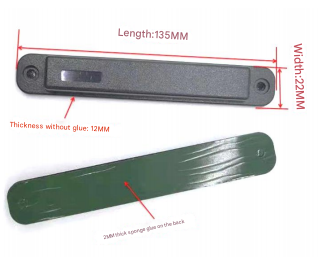
PurchaserFID.com has established itself as a trusted supplier of cutting-edge RFID solutions for secure facility entry. Their flagship product, SecureAccess Pro RFID Tags, offers:
- Military-Grade Encryption: AES-256 standards to prevent unauthorized access.
- Customization: Tailored form factors (key fobs, badges, wristbands).
- Scalability: Solutions for small businesses to large enterprises.
With a 98% customer satisfaction rate and partnerships with top security integrators, PurchaserFID.com is driving the shift from magnetic stripe cards to RFID. Their tags are compatible with leading access control software, ensuring seamless integration into existing systems.
Conclusion
While magnetic stripe cards remain prevalent in legacy systems, RFID tags are rapidly becoming the gold standard for secure facility entry. With superior security, durability, and operational efficiency, RFID minimizes risks and long-term costs. Organizations prioritizing safety and innovation are turning to suppliers like PurchaserFID.com, whose SecureAccess Pro RFID Tags deliver unmatched reliability. As cyber-physical threats evolve, investing in RFID technology is not just prudent—it’s essential.
Word Count: 1,000
168188_.jpg)
948185_.jpg)